
SEM Literary Agency

Laura Rossi
argentina
(Buenos Aires, 1980) es una escritora, editora y docente, una voz narrativa consolidada en la literatura argentina contemporánea. Su obra, que abarca la novela, el cuento y la poesía, se inscribe con fuerza en el género noir, como demuestra su activa participación en los festivales más importantes de literatura policial del país. Con novelas como Baldías y Ningún árbol sobre la tierra, ha construido un universo literario potente y reconocible.
La calidad de su proyecto narrativo está avalada por una hazaña que demuestra su excepcional consistencia: ser cuatro veces finalista del prestigioso Premio Clarín de Novela. Esta constancia en la excelencia se confirma con la obtención de cuatro Becas a la Creación del Fondo Nacional de las Artes. Su rol como co-directora de Brumana Editora la consolida, además, como una figura central y activa en el ecosistema editorial argentino.
BIO
WORK
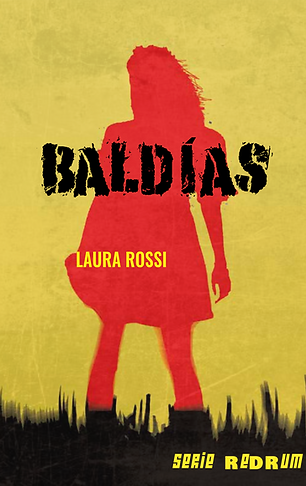
Baldías (Wastelands)
Charred bodies pile up. The police have no answers. Neither do the neighbors. There is speculation about the victims, but never about the perpetrators. *Baldías* is a novel that strikes a chord more for what it leaves unsaid than for what it explicitly states: a story of gender-based violence in which the horror lies not only in a modern-day "witch burning," but also in the fact that the mother and sister of the missing woman never even ask what happened to her. Through multiple narrative voices, Rossi reminds us that the killers are not monsters, but ordinary men—laborers, teachers—who murder women and make them disappear with total impunity. A society that normalizes femicide. A novel that cuts deep with its precision.
A family, marked by every form of violence, shares a meal atop a freshly buried body. A prosecutor must confront her own deepest terrors, as well as those inherent to her profession. A clandestine abortion goes wrong, leaving a corpse behind. A man turns himself in to the police, believing he has murdered his wife. A woman is buried alive, and her spirit speaks to us.
Steering clear of the normalized sordidness with which the press reports on the murder of women—an almost daily occurrence—the hushed narratives in *No me verás volver* (“You Won’t See Me Return”) must be pieced together from fragmentary, chaotic clues—perceptual and associative discoveries that seem to penetrate both time and matter. Reading them reminds us that literature is, among other things, a way of knowing.
In this , Laura Rossi’s narrative becomes political—less through any explicit attempt to document the violence of the present, and more through the very rhythm of her prose: the musical use of ellipses and the recurring *ritornello* of her sentences.
No me verás volver (You won´t see return)
